

 Facebook
 X
X
 Pinterest
 Copy Link
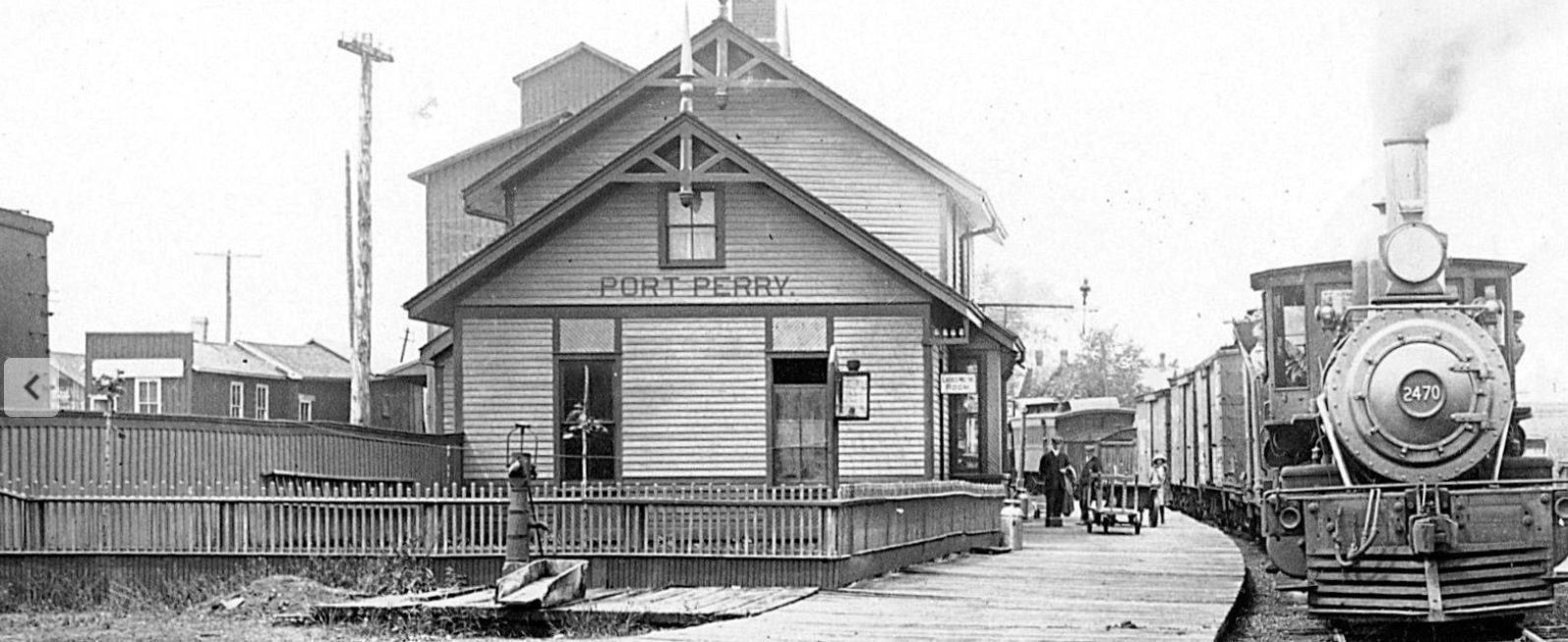
A Look Back at the Port Perry Train Station: From Railway Hub to Relocated Relic
Where Palmer Park now stretches along the east side of Water Street—just south of the iconic Grain Elevator—once stood one of Port Perry’s most important early landmarks: the Port Perry Train Station. Though the station itself has long since vanished from its original site, its legacy lives on in the shaping of local industry, commerce, and community growth.
The Arrival of the Railway (1871)
Port Perry’s first train station was built in 1871 by the Port Whitby and Port Perry Railway. On November 23 of that year, the first train steamed into town, marking a transformative moment in local history. The original building was modest—a small rectangular structure with a pitched “lean-to” roof that offered only minimal shelter to passengers waiting on the exposed platform.
At the time, the rails terminated in Port Perry. But with business opportunities growing, an extension to Lindsay was completed in 1877. This expansion led to the rebranding of the railway as the Whitby, Port Perry & Lindsay Railway.
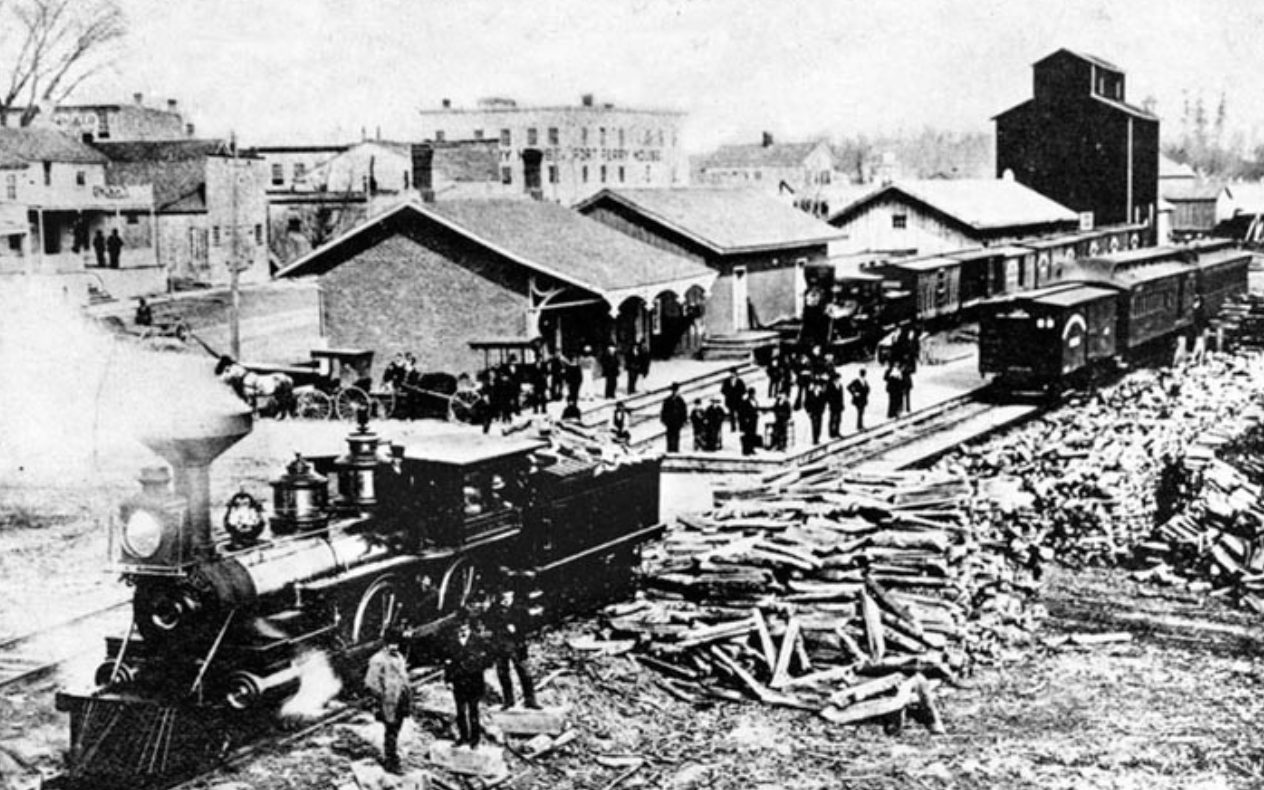
The first train station in Port Perry built in 1871. Photo credit The Toronto Railway Historical Association.
A Growing Community and a Busy Line
By 1886, the railway had become a vital part of everyday life in Port Perry. Six trains were stopping in the community each day—an impressive schedule that spoke to the region’s economic growth and the importance of Port Perry as a transportation link for goods and residents.
A New Station for a Growing Town (1888–1889)
As traffic increased, plans were set in motion for a larger, more functional station. Construction began in August 1888, requiring a shift of the rail line itself—moving it 25 feet to the east. By June 1889, the new station was complete and opened to passengers.
This new building was far more substantial than its predecessor. A two-storey wood-frame structure with a classic gable roof, it featured a distinctive rectangular operator’s window overlooking the tracks. The upper floor served as living quarters for the station agent, while the main level housed the essential station facilities. A single-storey freight shed extended from the main building, reflecting the importance of shipping and goods movement in the area.
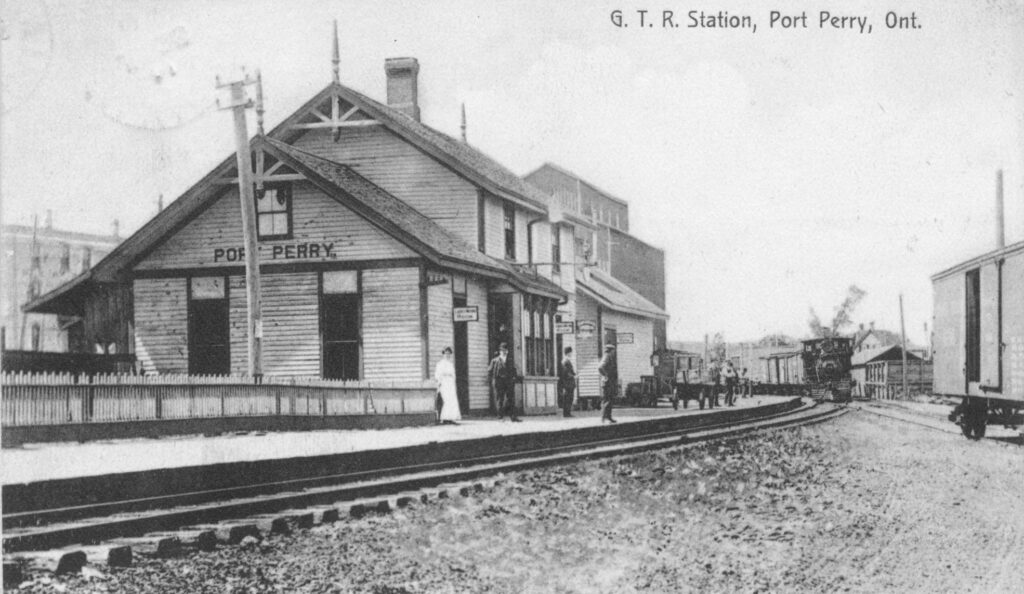
The second station in Port Perry was built in 1889. Photo credit: The Toronto Railway Historical Association.
Decline of Passenger Rail (1937)
Passenger service to Port Perry came to an end in 1937. As automobiles became more affordable and road networks improved, train ridership declined across the country. The economic pressures of the Great Depression only accelerated this downward trend.
The War Effort and the end of the Line (1942)
Not long after the last passenger trains left Port Perry, the world entered the turmoil of the Second World War. Steel became a critical resource, and the rails were lifted and melted down to support wartime production. By 1942, all railway operations in Port Perry had ceased.
A Building with a Second Life
Although the trains were gone, the station building itself survived—just not where it originally stood. After closing, it was moved across to the west side of Water Street, behind what is now 166 Water Street. For many years, the relocated structure housed various commercial ventures, including a well-remembered flower shop.
Over time, the building underwent multiple modifications and renovations. Today, it is generally unrecognizable from its historic form—but its bones, and its story, remain woven into the fabric of downtown Port Perry.
A Quiet Legacy
Though the station is no longer in its original location and the tracks have long been removed, the railway’s impact on Port Perry is undeniable. It helped shape the early economic landscape, connected the community to the wider region, and played a crucial role in the development of the town residents know and love today.
Source and Photo Credits:
The Toronto Railway Historical Association
Enjoy more history in our blog


