

 Facebook
 X
X
 Pinterest
 Copy Link
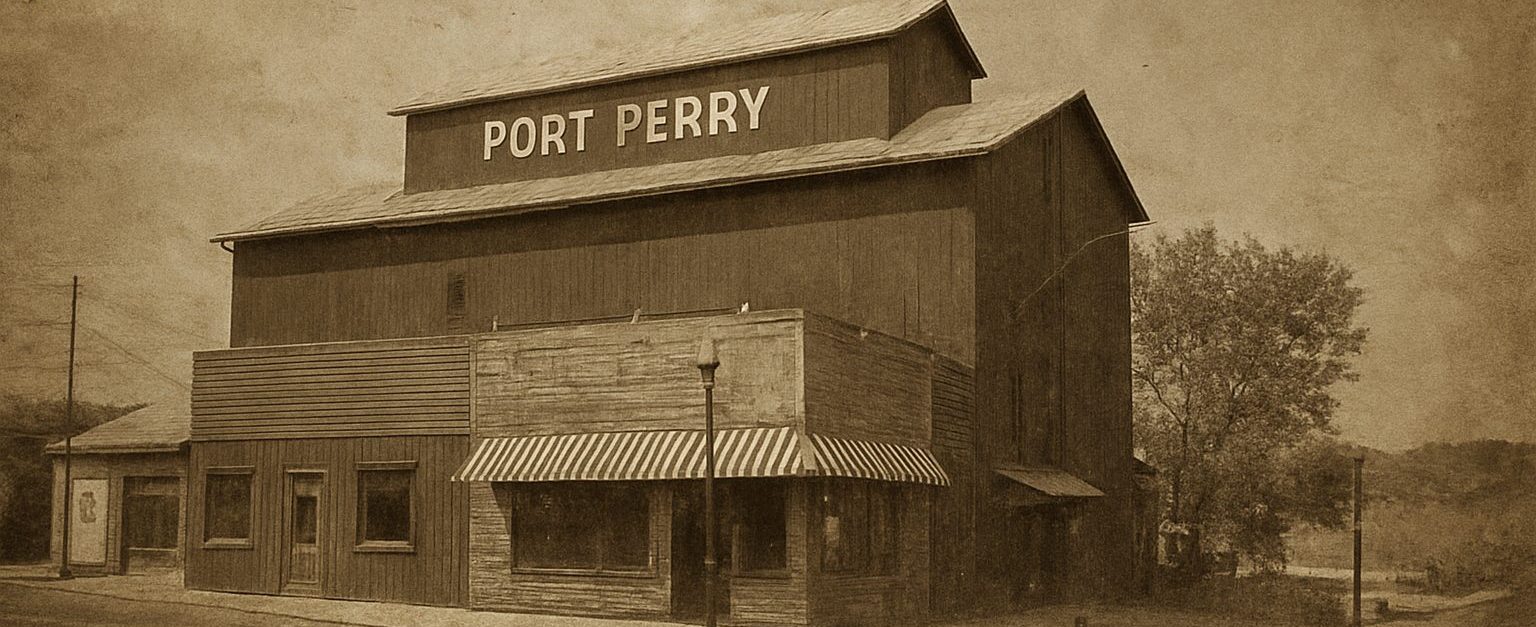
The Port Perry Grain Elevator: A Towering Legacy on the Waterfront
Standing proudly on the shores of Port Perry’s waterfront is one of Canada’s most remarkable historic structures: the Port Perry Grain Elevator. More than just a striking silhouette against the skyline, this iconic building is recognized as Canada’s oldest and most significant wood bin grain elevator—a testament to the town’s agricultural past and its resilience.
Early Beginnings: The Vision of George and Mark Currie
The story begins with George Currie, who arrived in Prince Albert after several years working as a grain merchant in Oshawa. In 1844, he launched a grain-buying business in the area, soon joined by his brother Mark, with whom he operated a thriving general merchandising store specializing in dry goods, liquors, wines, and even children’s wear.
By the 1850s, the Currie brothers had become one of the region’s leading grain purchasers, building a strong foundation for the agricultural economy that would shape Port Perry’s future.
.

.
Constructing a Giant: Building the Elevator in 1874
Although detailed records are limited, it is known that construction on the massive grain elevator began in April 1874. Built on a robust 24-inch stone foundation, the structure rose to an impressive 58 feet. Its enormous frame was crafted from heavy pine beams, while the exterior was clad in thick lumber—2×8 boards covering the first 26 feet and 2×6 boards above, all topped with vertical boarding to protect the joints.
Original accounts note that the building was painted a distinctive rusty red, making it an even more eye-catching presence on the waterfront.
The Ross Era and Survival of the Great Fire
Around 1876, George Currie sold the elevator to his partner Aaron Ross, who operated the business as A. Ross Elevator. When Aaron’s son William joined the company, the name changed to Ross & Son Elevator, marking a new chapter in its operation.
In July 1884, disaster struck. A devastating fire tore through Port Perry, destroying much of the town. Yet the grain elevator, remarkably, was the only building to survive—a fact that further cemented its status as a community landmark.
By 1900, the mill boasted 18 bins, each capable of holding a substantial 2,000 bushels of grain. Around this time, William Ross also upgraded the structure with protective metal siding.
A Century of Changing Hands
The early 20th century saw several ownership changes:
-
1909 – William Ross retired, selling to James Lucas
-
1916 – Lucas sold to Hogg and Lytle
-
Later – Hogg and Lytle sold to Toronto Elevators
In 1962, the elevator found its final industrial owner when Maple Leaf Mills (Master Feeds) assumed control, operating the mill until its closure in 1979.
.
.
A New Purpose and Preservation
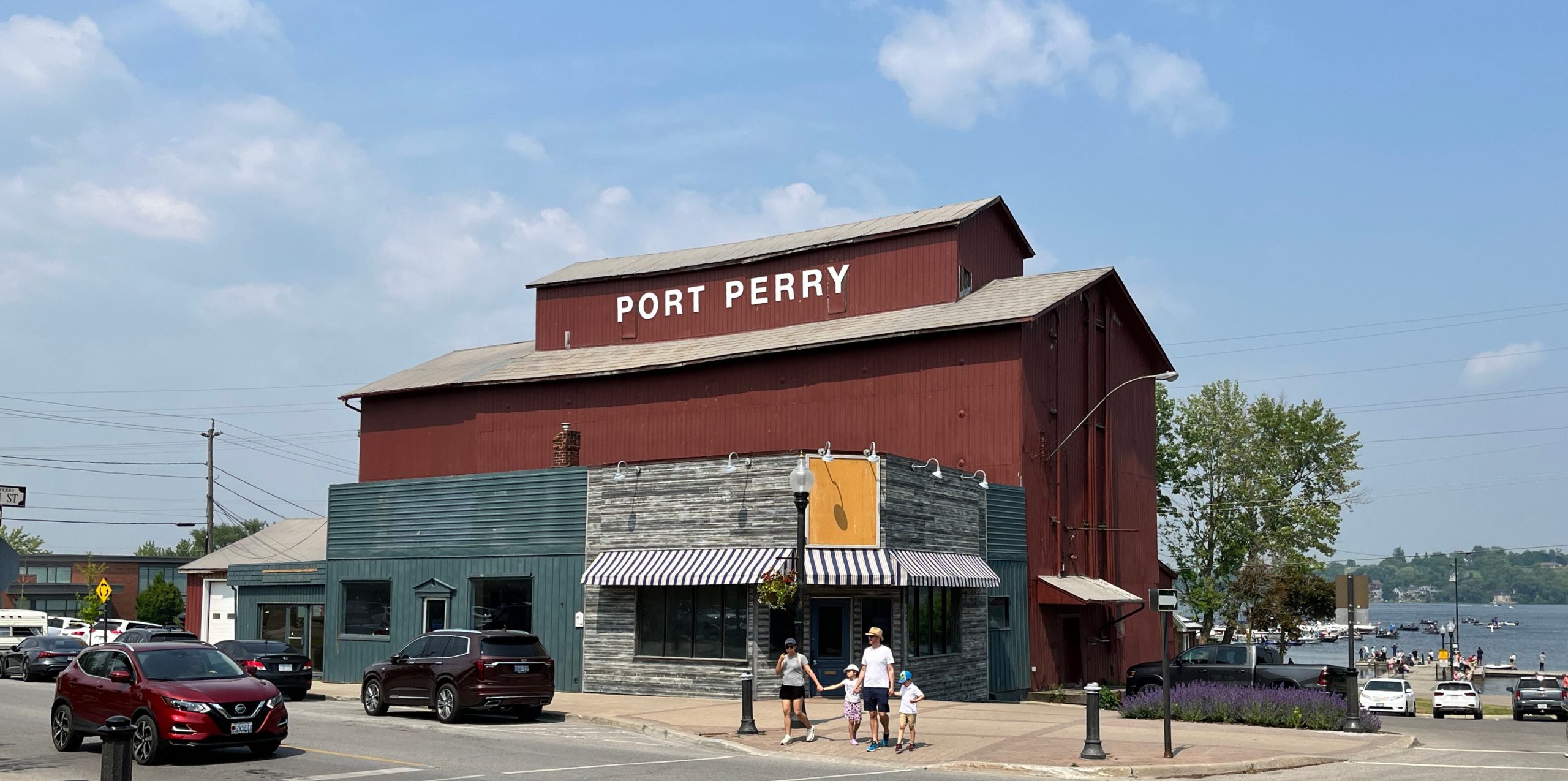
With the industrial chapter coming to an end, the elevator was purchased in 1980 by Fred Burghgraef, whose son Jim opened Port Perry Auto Supply in the building the following year. Locals affectionately came to know the structure as “The Old Mill.”
A significant milestone came in 2009, when the Township of Scugog acquired the property, completing municipal ownership of the surrounding waterfront block. This purchase ensured that the iconic elevator would remain a protected and celebrated feature of Port Perry’s historic lakeshore.
A Star on Screen
The elevator’s dramatic appearance and rustic charm have made it a popular filming location over the years, with the site appearing in several movies—a nod to its timeless and atmospheric presence.
A Lasting Symbol of Port Perry
Today, the Port Perry Grain Elevator stands as a rare surviving example of early Canadian grain-handling architecture. Its age, size, and wooden construction make it the largest and oldest wood bin elevator in the country—a truly irreplaceable heritage landmark.
Whether viewed as a relic of Port Perry’s agricultural roots, a survivor of tragedy, or a chapter in the story of the town’s waterfront, the Port Perry Grain Elevator continues to inspire admiration. It remains not just a building, but a symbol of resilience, innovation, and the enduring spirit of the community.
Source:
George Currie’s Grain Elevator Researched and published by J. Peter Hvidsten


